
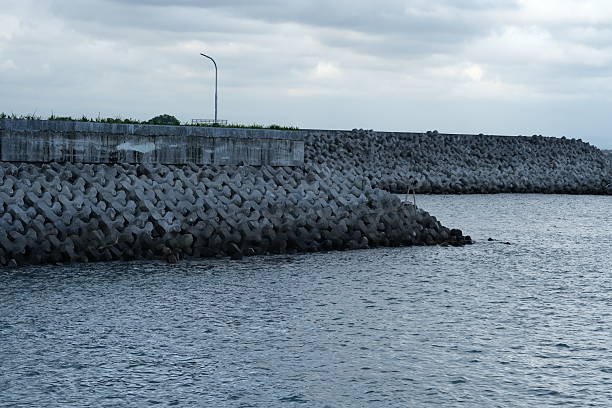
Concrete structures built along the Gulf Coast face unique environmental challenges that can significantly reduce their service life if left unprotected.
From coastal humidity to airborne chlorides and constant moisture exposure, these conditions accelerate deterioration and corrosion.
The Coastal Challenge
Unlike inland environments, Gulf Coast structures are continuously exposed to:
- Salt-laden air
- High humidity
- Heavy rainfall
- Standing moisture
- Chloride contamination
These factors create ideal conditions for concrete deterioration and reinforcing steel corrosion. Chloride penetration is one of the most significant causes of premature concrete failure in coastal infrastructure.
How Deterioration Begins
Although concrete appears solid, it contains microscopic pores and capillaries.
Water and chlorides gradually enter these pathways, eventually reaching embedded steel reinforcement.
As corrosion develops:
- Steel expands
- Internal pressure increases
- Cracks form
- Concrete begins to spall
- Structural performance declines
By the time visible damage appears, deterioration has often been occurring for years.
Common Signs of Coastal Damage
Property owners should monitor for:
- Rust staining
- Surface scaling
- Cracking
- Spalling
- Delamination
- Moisture intrusion
These symptoms often indicate that chlorides and water have already compromised the concrete structure.
Prevention Is More Effective Than Repair
The most effective strategy is preventing water and chlorides from entering the concrete in the first place.
Protective treatments, restoration systems, and routine inspections can dramatically slow deterioration and reduce the need for major repairs.
By preserving concrete before extensive damage develops, owners can extend service life and reduce long-term maintenance costs.
Protecting High-Value Assets
Whether it’s a bridge, parking structure, commercial property, or marine facility, preservation is one of the smartest investments an owner can make.
The cost of protection is often a fraction of the cost of replacement.
Conclusion
Gulf Coast environments are demanding, but concrete failure is not inevitable. With proper protection and proactive maintenance, structures can remain durable, reliable, and cost-effective for decades to come.